Project Length: 2 weeks
Tools: Premiere Pro, After Effects
Team Members: Fannie Liu, Jerry Yang
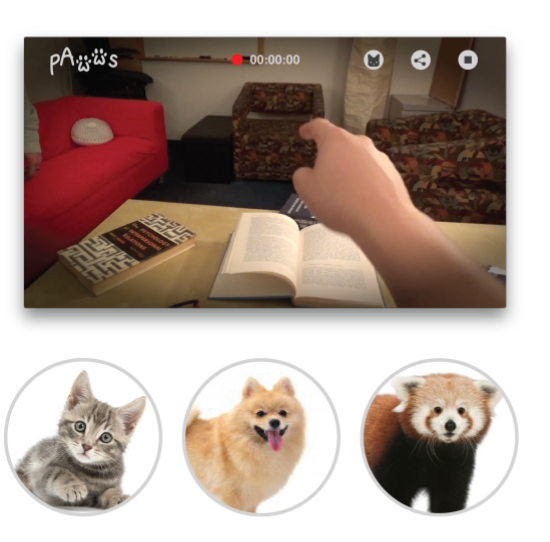
Pawws is an augmented reality concept that brings virtual therapy animals to wherever they are needed. Users have the ability to select the therapy animal of their choice, to interact with it with playful gestures, and to record and send footage of the animal for others to enjoy.
Motivation
This project was born out of finding an audience, context, and meaningful purpose for an emerging technology. Our group chose to explore the usage of augmented reality to implement virtual therapy animals for all age groups of different occupations.
Process
Exploring the Problem Space
From the onset of this project, our group had an interest in focusing on mental health. To begin exploring this area, our team turned to existing academic literature focusing around depression, anxiety, and stress. Our research in this field led us to therapeutic animals. Many schools around the country, including Carnegie Mellon University, bring dogs and other animals on campus to help students destress. Our group decided that mixed reality would be an interesting way to extend the benefits of therapy to users who may not be able to afford pets, or have access to therapy pet sessions.
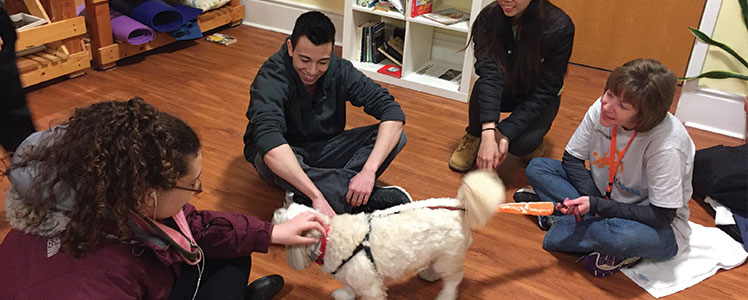
Photo from Carnegie Mellon University's Paws to Relax: Therapy Dog Program
Targeting Specific User Groups
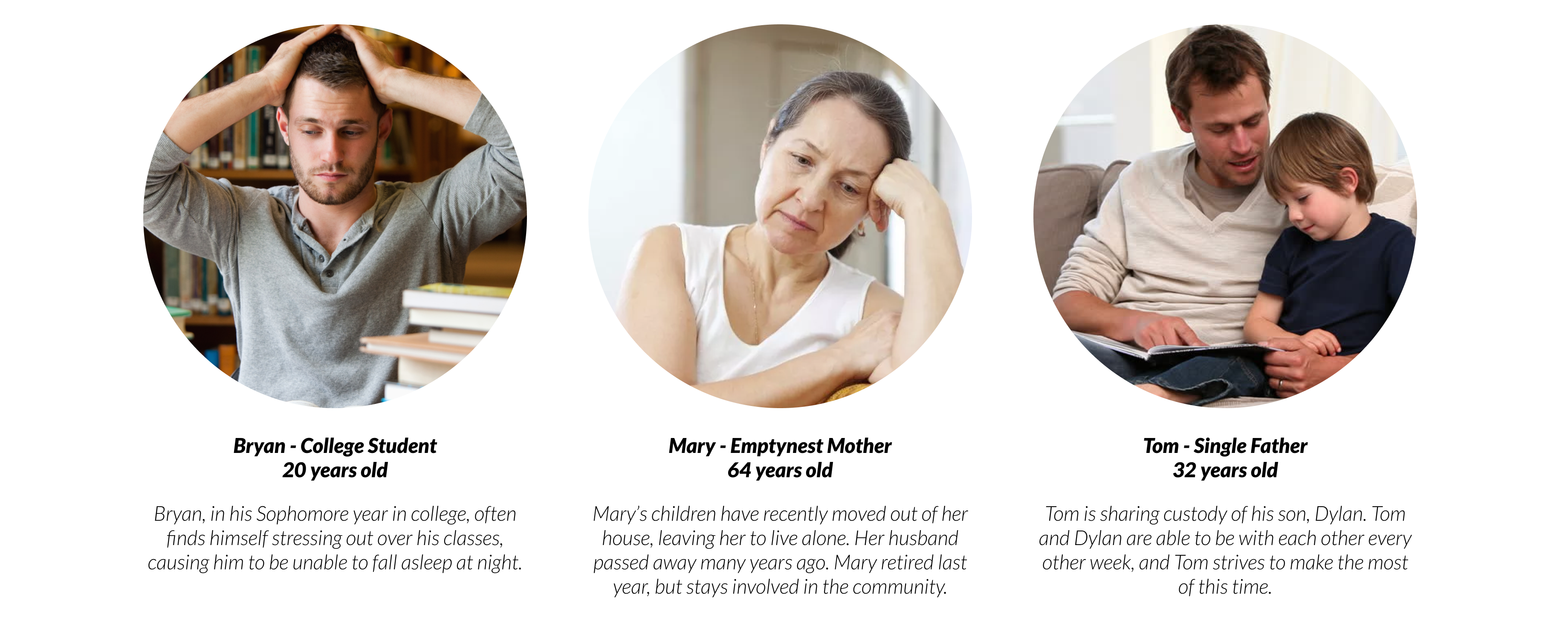
Our group began exploring the ways in which augmented animal therapy could benefit particular groups of people. In our ideation phase, we envisioned three contexts in which we believe can be greatly impacted from an AR solution:
College dorms full of stressed out students, particularly around exams
Households of parents whose children have grown up and moved out
Learning environments where access to interactions with exotic animals is difficult
To ground ourselves and to communicate each of our potential user groups, we created a persona within each context.
Video Storyboarding
To envision how our solution might provide value in each of these contexts, we created video storyboards. These storyboards were used to recieve academic feedback on our video concept, as well as to determine which audience we intended to watch our video.



Concept Video Implementation
Using our video storyboards as guidance, our team filmed our concept video and edited it with Adobe Premiere Pro and Adobe After Effects. The audience for our video is intended to be universities, college students, and health providers.